

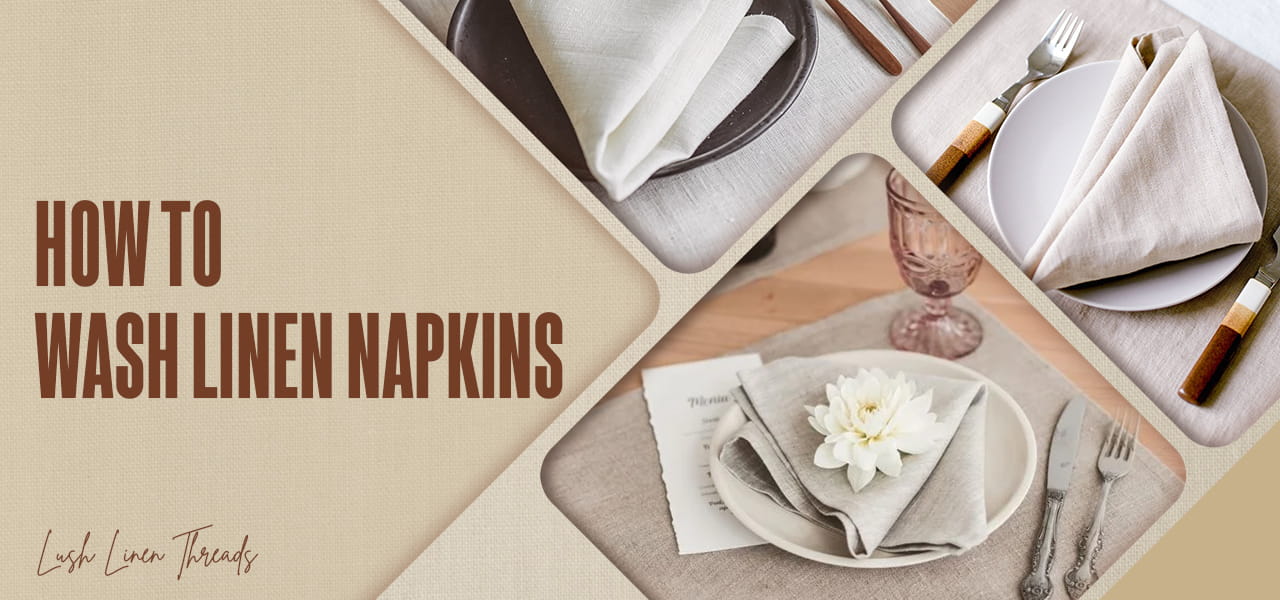
Keeping linen napkins soft, crisp, and long-lasting is easier than you think. Many struggle with shrinkage, fading, or stains, but this guide shows how to wash linen napkins step by step, by hand or machine, while preserving their elegance. With Lush Linen Threads, you can enjoy beautiful table settings without worry.
Why Linen Napkins Require Special Care
Linen is durable, but it can look rough fast if you use high heat, harsh detergent, or aggressive cycles. Because it absorbs quickly, stains can set fast—so gentle washing and quick pre-treatment make the biggest difference.

Linen Fiber Characteristics:
Linen absorbs quickly, which helps with spills but also means stains set faster. It naturally wrinkles, and those creases look deeper if the fabric is overdried or spun too hard.
Common Washing Issues:
Even with careful care, linen napkins can face a few challenges:
-
Shrinkage: Linen often shrinks a few percent when exposed to hot water or high-heat drying, especially if it wasn’t prewashed.
-
Stiffness & deep wrinkles: Usually caused by detergent residue, high spin, or overdrying.
Understanding these characteristics helps you take the right steps to protect your linen napkins, keeping them soft, smooth, and visually appealing for years of use.
Pre-Wash Preparation
Before diving into the washing process, it’s essential to prepare your linen napkins correctly to keep them soft, vibrant, and long-lasting. Great results start with quick pre-wash steps that protect color and make stains easier to lift.
Shake & Sort Napkins
Start by gently shaking each napkin to remove crumbs, dust, or loose debris. This prevents particles from embedding into the fibers during washing. Next, sort your napkins by color and type—keep whites separate from colored or patterned pieces. This step reduces the risk of color bleeding and helps maintain the bright, natural hues of your linen. Sorting also allows you to treat delicate or embroidered napkins differently, so they receive the gentlest care possible.
Pre-Treat Stains
Act quickly when stains appear. Linen fibers absorb liquids rapidly, so prompt attention is key. For common stains such as red wine, coffee, or sauces, lightly blot the area with cold water to lift excess residue. Apply a small amount of mild detergent, let it sit for 10–20 minutes, then wash. For oily stains, use a grease-cutting pre-treat and avoid heat until the stain is gone. Avoid rubbing aggressively, which can damage the fibers or spread the stain. By pre-treating stains, you make the washing process more effective while preserving the napkin’s texture and color.
Washing Linen Napkins
To keep your napkins looking fresh, soft, and vibrant for years, it helps to follow the right washing techniques. Whether you wash by hand or machine, the goal is the same: gentle chemistry, low friction, and controlled heat.

Hand Washing Tips
Hand washing is the safest method for delicate or embroidered linen napkins, as it gives you full control over water temperature, detergent, and agitation. Begin by filling a basin with lukewarm water (around 30°C) and add a gentle, pH-neutral detergent. Soak and gently swish for 5–8 minutes—no scrubbing. Rinse until the water runs clear, then press out water without twisting. After rinsing thoroughly in clean, lukewarm water, gently press out excess water—avoid wringing, which can distort the fibers and create unwanted wrinkles. For best results, repeat rinsing until the water runs clear.
Machine Washing Tips
For everyday linen napkins or larger loads, machine washing is convenient and safe when done correctly. Use a gentle or delicate cycle with cold to warm water (30–40°C) and a mild detergent. Avoid bleach or strong chemical detergents, as these can weaken fibers and fade colors. Opt for a low spin setting to reduce creasing, and if possible, place napkins in a mesh laundry bag to protect them from friction with other items. After the cycle, remove the napkins promptly to minimize wrinkles and prepare them for proper drying or ironing.
Drying & Ironing Linen Napkins
Proper drying and ironing are essential steps to maintain the texture, shape, and longevity of your linen napkins. Knowing how to wash linen napkins is only half the battle—how you dry and finish them can make the difference between crisp, elegant napkins and ones that look worn or misshapen.
Air Dry vs. Tumble Dry
For the best results, lay your linen napkins flat to air dry. This method minimizes shrinkage and helps the fibers retain their natural softness. If you tumble dry, use low heat, and pull them out slightly damp. Shake, smooth seams, and finish with air-drying or a quick press. Leaving them damp not only makes ironing easier but also helps prevent deep-set wrinkles. Avoid high heat, which can weaken fibers, distort the shape, and dull colors over time.
Ironing & Presentation Tips
Ironing linen napkins correctly enhances their appearance and ensures a polished look for any table setting. For optimal results, iron the napkins when they are slightly damp, or use a steam iron to relax the fibers. Work on a smooth, flat surface and iron from the center outward to prevent creases. After ironing, fold the napkins neatly—whether into classic rectangles, triangles, or decorative shapes—to create a refined, professional presentation for formal dining or special occasions. Regular proper ironing will keep your napkins looking crisp and elegant, extending the life of your linen investment.
Long-Term Care & Common Mistakes
Proper long-term care is just as important as the washing process to maintain linen napkins’ softness, vibrancy, and elegance. Applying the right techniques for drying, folding, and storage will help you fully benefit from how to wash linen napkins while extending their lifespan.
Softening & Preserving Linen Fibers:
Maintaining the softness of linen napkins requires occasional attention beyond washing. If napkins feel stiff, try an extra rinse first. If needed, use a small amount of white vinegar occasionally in the rinse (skip scented softeners that can leave residue and reduce absorbency). After washing, allow napkins to air dry flat whenever possible, avoiding direct sunlight, which can weaken fibers and fade colors. Proper folding or rolling before storage also helps prevent creases and preserves the fabric’s natural drape.
Common Mistakes to Avoid:
Several common mistakes can compromise linen quality:

-
Hot water or harsh detergents: High temperatures and strong chemicals can shrink fibers and dull colors. Always opt for mild detergents and cold to warm water.
-
Over-wringing or twisting: Excessive wringing stresses fibers and causes permanent wrinkles. Gently press out water instead.
-
Extended sun exposure: Direct sunlight can fade colors and weaken fabric. Dry napkins in shaded areas or indoors for best results.
-
Over-washing: Frequent washes reduce linen longevity. Wash only when necessary, and spot-clean light stains to maintain texture and color.
Quick Linen Napkin Tips
Taking care of linen napkins involves more than just washing—they also need attention for storage, drying, and stain management. These practical tips will guide you in handling, preserving, and maintaining them effectively.
How often should linen napkins be washed?
Wash napkins only when needed; spot-clean light stains to preserve fibers and color.
How to store linen napkins properly?
Fold or roll napkins and store them in a cool, dry place to avoid creases and sun damage.
Can embroidered napkins be washed?
Yes, but hand wash gently or use a delicate cycle; avoid harsh detergents to protect embroidery.
How to dry linen napkins without shrinking?
Air dry flat or tumble dry on low heat while slightly damp to prevent shrinkage.
Can I use hot water to disinfect linen napkins?
Avoid very hot water; warm water is safer to prevent shrinkage and fiber damage.
Caring for linen napkins properly and following how to wash linen napkins ensures they stay soft, vibrant, and wrinkle-free. Transform your table setting with Lush Linen Threads premium napkins for lasting elegance and effortless style.


