

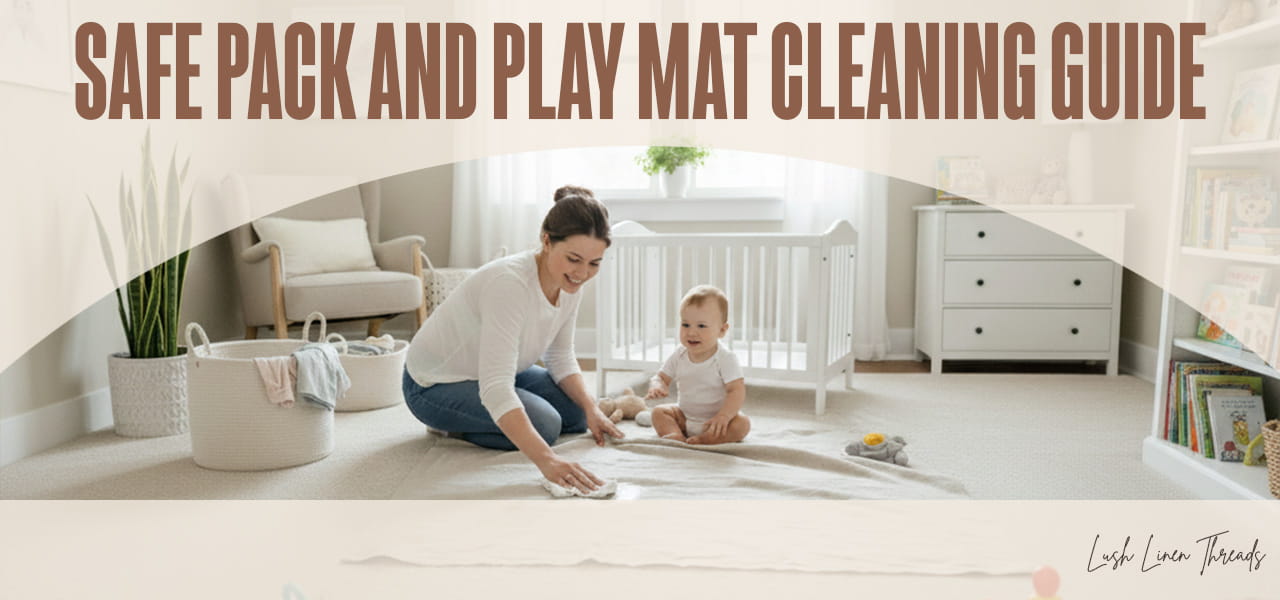
If you searched how to clean a pack and play mat, you probably want a surface that feels fresh and baby-safe again without guesswork. In this guide from Lush Linen Threads, you’ll get a simple routine for regular days, clear fixes for real-life accidents, and the drying rules that prevent the lingering “still not fresh” smell.
Why Cleaning Your Pack and Play Mat Matters
Even when it looks clean, a pack and play mat can trap crumbs, dried drool, milk residue, skin oils, and—most often—detergent film that wasn’t fully rinsed. This section shows a simple cleaning rhythm and the quick “clean it today” signs, so buildup stays low and deep cleans stay rare.

What Builds Up During Real Use
A pack and play mat can look fine and still hold onto the stuff that causes odor and irritation. Think crumbs, dried drool, milk residue from spit-up, skin oils, and cleaner residue that never fully rinses away. In warm or humid rooms, even a small amount of leftover moisture or residue can turn into a stale smell fast.
The biggest surprise is the residue. If the mat feels slightly sticky or dries stiff, that’s usually detergent film—not the fabric. The fix is almost always less soap and a better rinse pass.
How Often You Should Clean It
You don’t need a complicated schedule. Just keep it simple and consistent:
-
After any spill: Spot clean right away. It takes two minutes now and saves you a deep clean later.
-
If it’s used every day: Do a quick weekly refresh to stop odors and residue from building up.
-
After bigger messes: Try to clean it the same day, especially after diaper leaks or spit-up.
If your baby drools a lot, has reflux, or uses the mat for play all day, a light wipe-down every day or two helps a lot. The goal isn’t perfection—it’s keeping buildup low so cleaning stays easy and gentle.
Signs It Needs Cleaning Today
You don’t have to wait for a big spill. If any of these show up, it’s a good time to clean it now:
-
It smells a little musty or sour, and the smell comes back even after it dries.
-
The surface feels stiff or slightly coated, like there’s a film on it.
-
One area looks dull or darker than the rest, usually where spills happen most.
-
Seams or edges feel slightly damp, or stay cool longer than the center.
Catching these early usually means a quick clean is enough—and you avoid a tougher deep clean later.
Keep the schedule simple, and you’ll avoid most deep cleans.
A Step-by-Step Cleaning Routine for Regular Days
If you’re cleaning the mat on regular days, this routine covers it. The goal is to lift grime without soaking seams, then dry thoroughly so the odor doesn’t return.
What you’ll need: clean cloths, a soft brush or handheld vacuum, mild detergent, a small bowl of clean water for the rinse pass, and a fan for drying.
Step 1: Remove Debris and Prep Surface
Start dry. Remove sheets or covers, then shake off crumbs. If you have a handheld vacuum or soft brush, use it gently. This prevents debris from turning into muddy streaks when you wipe.
Do a quick scan of edges and seam lines. Those spots dry more slowly and are where smells tend to start.
Step 2: Clean Gently Without Overwetting
Use a clean cloth dampened with water. If needed, add just a few drops of mild detergent to the cloth (not directly to the mat). Work in small sections and use light pressure.
For small spills, blot first, then wipe. Avoid aggressive scrubbing, which can spread a stain and push moisture deeper into seams.
Step 3: Rinse Residue and Dry Fully
This step is what keeps the mat from feeling sticky or smelling “off” later. After cleaning, do one more pass with a cloth dampened with plain water to remove any leftover soap.
Then dry with airflow. Lay it flat and use a fan if you can. A simple safety check is the tissue press test: Press a dry tissue along seams and edges for a few seconds. If the tissue picks up moisture or the area feels cool and damp, it needs more drying time before the baby uses it.
Follow the order, and most “sticky” problems disappear.
Deep Cleaning for Accidents and Stubborn Odors
Accidents feel urgent, but the safest approach is still controlled and repeatable. Remove the source, remove residue, and dry completely.

Urine Odor Removal Without Masking Smell
Blot immediately. Press firmly with a dry cloth or paper towel to lift as much moisture as possible. Then clean the area with a damp cloth and mild cleaner.
Odor lingers when moisture gets trapped or residue stays on the surface. After cleaning, do a plain-water wipe and dry with strong airflow. If the smell returns after drying, repeat a gentle cycle instead of adding fragrance.
Milk and Spit Up Stain Removal
Blot first, then wipe gently. These messes can leave a sour smell if a thin film remains, so the rinse or wipe-down step matters.
After you clean, do a plain-water wipe, then dry fully. If the mat is used for naps, don’t rush reassembly until it is dry to the touch and the seams feel dry.
If Your Cover Is Removable, Wash It Safely
If the mat has a removable cover and the care label allows machine washing, use a gentle cycle and mild detergent. Many covers benefit from an extra rinse if they dry stiff or smell soapy.
Air drying is the safest default. If you use heat, keep it low and stop early so you don’t “bake in” residue or odor.
If you blot first, keep cleaning gently, and finish with a thorough rinse and full dry, most “stubborn” problems stop being stubborn. That simple order is what Lush Linen Threads recommends when you want results that last, not a quick fix that returns tomorrow.
What to Avoid When Cleaning a Pack and Play Mat
Most cleaning mistakes come from trying to be “extra thorough.” This section shows the few habits that backfire—ones that trap moisture, leave residue behind, or lock in odor—so your mat ends up worse instead of better.
Avoid Soaking and Pushing Water Into Seams
Soaking feels thorough, but it often creates the musty smell you are trying to prevent. Seams and edges hold moisture longer, especially in humid rooms. Use the smallest amount of moisture that can do the job, and repeat gentle passes if needed.
Avoid Too Much Detergent and Heavy Fragrance
More soap does not mean more clean. It often means more residue, more stiffness, and a scent that mixes with the real odor instead of removing it. If the surface feels coated after drying, cut the detergent next time and prioritize a rinse or wipe-down.
Avoid High Heat Drying That Traps Odor
High heat can lock in smells when the surface wasn’t fully rinsed. It can also make a cover feel harsher. Airflow is usually safer than heat for getting back to neutral.
Disinfect, Dry, and Store It Safely
This is the finish that makes your cleaning last. Here’s when disinfecting is actually needed, how to dry the mat so it won’t turn musty, and the simple storage habits that keep it fresh between uses. Always follow the manufacturer’s care label and your playard manual—when they differ, the manual should guide what’s safe for the mat’s materials.
When Disinfecting Actually Makes Sense
Most days, cleaning is enough. Disinfecting is useful when someone has been sick, and the mat was used during that time, or when there has been a high-risk mess you want to treat more carefully.
When you disinfect, follow the product label for dilution and contact time. Never mix cleaning products, and ventilate the area while it dries. If the label requires rinsing, rinse. If the label requires rinsing, rinse. Even when it doesn’t, a plain-water wipe after contact time can reduce residue on skin-contact surfaces.
Drying Rules That Prevent Musty Odor
Musty odor usually comes from one thing: the mat was put back in use or stored while slightly damp. Dry it flat with strong airflow, and give seams and edges extra time. Use the tissue press test along seam lines—if there’s any moisture transfer, keep drying. Don’t remake the mat or stack bedding until everything is completely dry.
One more habit that helps a lot is waiting to add sheets or stack bedding on top until everything is fully dry. In humid rooms, give it extra time and use a fan—an “almost dry” mat is the one that turns musty later, especially after storage.
Linen Cover Notes for Softness and Storage
If you use a linen cover, the biggest softness wins are simple: use less detergent than you think, add an extra rinse when it feels stiff, and air dry with airflow. Linen also benefits from breathing time before storage. Make sure it is fully dry, then store it in a breathable way so it doesn’t pick up a stale smell.
Disinfect only when it makes sense, follow the label for contact time, and don’t store the mat until seams and edges are fully dry. Careful, dry, and smart storage prevents most “mystery odors” from coming back.
Common Questions About Pack and Play Mat Cleaning
If you’re still unsure about how to clean a pack and play mat, these quick answers cover the questions most parents ask, from machine washing a cover to drying time and odor control.

Can you machine wash a pack and play mat cover?
Yes, if the care label allows it. Use a gentle cycle and mild detergent, then add an extra rinse if it dries stiff or smells soapy. If you’re using linen, the extra rinse and air drying usually help it stay softer.
How often should you clean a pack and play mat?
A weekly refresh plus spot cleaning after spills is a strong baseline. If the mat is used daily, a quick wipe-down every day or two helps prevent odor buildup. Clean right away after accidents for the easiest results.
How do you remove urine smell without masking it?
Blot first, then clean gently and wipe off residue with plain water. Dry with strong airflow and give seams extra time. Repeat a gentle cycle if the smell returns after drying.
How do you remove milk and spit-up stains on linen?
Blot, wipe gently, then do a plain-water wipe to remove leftover film. Dry fully before use. Acting quickly helps prevent sour odor.
Do you need an extra rinse?
Often, yes—especially if the surface feels coated or dries stiff. An extra rinse helps remove detergent film that can hold onto odors. If you’re using linen, this step is especially helpful for keeping the hand-feel softer.
How long should the cover dry before the baby uses it?
Wait until it’s dry to the touch, then confirm with the tissue press test along the seams. In humid rooms, use a fan and allow extra time.
If you follow the label, clean gently, rinse off the residue, and dry the seams completely, most problems will solve themselves quickly. Use this FAQ as a quick reset any time you’re stuck between “clean enough” and “clean that lasts.”
You now know how to clean a pack and play mat in a way that holds up between messes: gentle cleaning, residue control, and fully dry seams. Keep that order, and “repeat odors” become the exception, not the routine. Lush Linen Threads is here when you want nursery pieces that stay breathable and easy to live with.


