

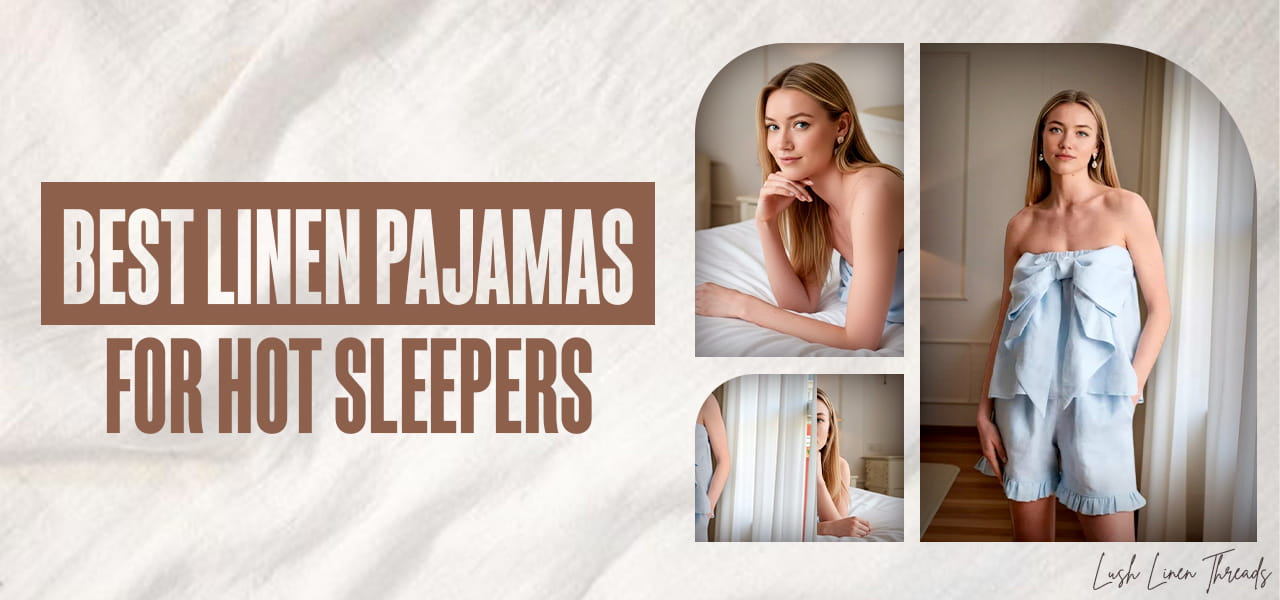
If you’re searching for the best linen pajamas for women, it’s probably because you keep waking up warm, slightly damp, and uncomfortable—not because you need another cute set. This guide from Lush Linen Threads shows how to choose linen pajamas that actually work for hot sleepers, using simple checks for fabric weight, airflow, and dry-back.
A Cooler Sleep Starts With GSM, Fit, and Dry-Back
I used to think the goal was simply “cooler pajamas.” Then I noticed the pattern: my worst nights weren’t always the hottest nights—they were the nights when the air felt thick. If you live somewhere humid, you already know what that means. Relative humidity often sits around 60–80% in humid regions, and that changes everything because evaporation slows down. When sweat can’t evaporate, fabric stays damp longer, and that damp layer is what makes you feel trapped and restless.

That’s why I don’t love shopping by vague temperature-regulating claims. For hot sleepers, comfort comes down to three real-world filters that are much easier to judge than marketing claims.
Start with GSM to get the weight right. Then check the fit, because airflow disappears when the cut is too close through the hips and underarms. Finally, pay attention to dry-back—the part that decides whether your pajamas still feel comfortable after sweat shows up.
When linen works, it usually works because its structure supports ventilation, which helps moisture leave your body instead of sitting there. That’s the real difference: not feeling cool for five minutes, but staying comfortable through the night. That’s also what separates the best linen pajamas for women from sets that feel fine at bedtime but fail once you sweat. At Lush Linen Threads, we use this same framework to think about hot-sleeper comfort before we ever talk about style.
Linen vs Cotton vs Bamboo for Night Sweats
If night sweats keep waking you up, fabric matters more than style. Here’s a quick comparison to help you pick what stays breathable and less clingy in your room.
Quick Comparison Table
- Linen — Breathability: High. Dry-back speed: Fast. Cling when sweaty: Low. Best for: Hot + humid nights. Avoid if: You want stretch.
- Cotton — Breathability: Medium. Dry-back speed: Medium. Cling when sweaty: Medium. Best for: Dry heat. Avoid if: High humidity.
- Bamboo/Viscose — Breathability: Medium. Dry-back speed: Slower. Cling when sweaty: Higher. Best for: Cool-touch feel. Avoid if: Heavy sweating.
- Modal — Breathability: Low–Medium. Dry-back speed: Slower. Cling when sweaty: Higher. Best for: Lounging. Avoid if: Overheating.
Hot sleepers usually care about two sensations more than anything else: “Do I stay breathable?” and “Do I start sticking to my pajamas?” Linen tends to perform well because it balances airflow with a more forgiving feel once moisture shows up. Cotton can be comfortable, especially in dry heat, but in humidity, it can feel heavier when damp. Bamboo/viscose often feels cool at first touch, yet for some people, it doesn’t return to a dry feel quickly enough once sweating starts. Modal is famously soft for lounging, but it can feel less reliable when you’re overheating overnight.
Why Cool-Touch Fabrics Can Feel Clammy
This is the trap: first-touch coolness isn’t the same thing as staying comfortable through the night. Once you sweat, the fabric either releases moisture—or it holds onto it. If it holds onto it, you get that clammy feeling that wakes you up and makes you start adjusting your clothes and bedding.
If you’re a true hot sleeper, it’s usually smarter to choose for airflow and dry-back than to chase a fabric that feels icy for the first five minutes.
Pick the Right Fabric for Humid vs AC Rooms
Where you sleep matters as much as what you wear. In a humid room—especially if you’re relying on a fan—pajamas that dry back fast and don’t cling tend to feel better, and that’s where linen often shines. In a consistent AC room where humidity is lower, you have more flexibility, and a slightly more substantial set can still feel comfortable as long as it’s cut with room to breathe.
If your nights swing between both conditions, midweight linen is often the most forgiving middle ground because it doesn’t feel too heavy when the air turns sticky, and it doesn’t feel too flimsy when the room is cool.
Best GSM for Linen Pajamas That Sleep Cool
GSM is one of the few numbers that can actually help you predict how linen pajamas will feel at night. In this section, you’ll see the best GSM ranges for hot sleepers, what matters beyond GSM, and the design details that can still trap heat.

Best GSM Ranges for Hot Sleepers
GSM might sound technical, but it’s one of the few numbers that actually helps you predict comfort. For hot sleepers, linen pajamas usually feel best when they’re not overly heavy.
Linen around 140–180 GSM often feels airy and quick to dry, which tends to work best on very warm or humid nights. If you want something that still breathes but feels a bit more stable, 180–220 GSM is a safe all-around range. If your room is reliably cool with air conditioning and you like a little more body without going heavy, 220–240 GSM can work well.
If you regularly wake up damp and sticky, this 140–220 GSM window is often where the best linen pajamas for women start to make sense for hot sleepers.
GSM vs Weave vs Finish: What Matters Most
GSM is a strong starting point, but it isn’t the whole story. Two sets can share the same GSM and still feel different because the weave and finishing change how linen behaves. A more open weave can feel airier at the same weight. Washed or garment-washed linen often feels softer sooner, while regular linen may take longer to break in.
Construction matters too. Linen can be breathable on paper and still feel warm if the cuffs are tight, the waistband is firm, or the cut hugs your hips and thighs. If a product page doesn’t list GSM, look for honest signals like “washed linen” and close-up photos that show texture and drape.
If you can, check the size chart for actual garment measurements, not just S–M–L labels. Clear care instructions and an easy return policy are small signals that usually come with better-made sleepwear.
Red Flags That Trap Heat
Most “linen didn’t work for me” stories come down to bottlenecks that block airflow. Tight cuffs at the wrist or ankle can seal off ventilation. Strong elastic can create that trapped feeling around your waist. Narrow sleeves can hold heat around the underarm. And in humid climates, very dense or heavy linen can feel slower to dry on the body.
If your pajamas ever feel like a damp layer, the fix is almost always more breathing room and fewer tight openings—not thinner fabric alone.
Fit and Design Details That Keep You Cooler
Fabric helps, but fit is what makes linen actually feel cooler. This section shows the simple airflow checks, how to choose shorts or pants for your room, and the small design details that matter most for hot sleepers.

Fit Checks for Airflow and Comfort
Fit is the quiet superpower for hot sleepers. Linen needs space to drape and move air, otherwise it can’t do what you bought it for. A practical target is 2–4 inches (5–10 cm) of ease at the hip, enough that the fabric hangs instead of clinging. When you sit down, it shouldn’t pull tight across your thighs. When you lift your arms, your underarm area shouldn’t feel restricted. And your waistband should feel stable without squeezing.
If you like a polished look, you can still get it. Linen doesn’t need to be oversized—it just needs to not grip.
Shorts vs Pants vs Sleeves for Hot Nights
This choice is best made based on your real nights. In high humidity, shorts often feel better because they reduce thigh cling and increase ventilation. In an AC room, relaxed pants can be comfortable without overheating as long as the ankle opening isn’t tight. If you sweat heavily around the underarms, sleeveless or short sleeves can reduce trapped heat there. If chafing is a concern, seam comfort and looseness matter more than length.
If you want the simplest starting point, a short-sleeve top with relaxed shorts is usually the easiest hot-sleeve baseline.
Hot-Sleeper Features Checklist
Some details look like styling, but they’re actually comfort features. A drawstring waist lets you adjust pressure when you’re warm, which reduces that trapped feeling around your midsection. A button front or open neckline improves ventilation around the chest and neck. A relaxed leg reduces cling once you sweat, which is one of the biggest reasons people wake up. Soft labels and comfortable seams reduce irritation in the places that flare when you’re hot and damp.
When someone says they finally found their set, it’s usually because the fabric and these small features are working together.
Care Rules That Keep Linen Pajamas Cool and Soft
A good linen set can stay soft and breathable for a long time, but care makes the difference. Here’s how to wash and dry linen pajamas so they don’t turn crisp, and how to keep that cool, dry feel night after night.
Wash Rules That Prevent Stiffness
When linen feels stiff, it’s often laundry-related rather than “linen being linen.” Detergent residue is a common culprit, especially when the machine is overloaded, and the fabric can’t rinse clean. Cool or cold water on a gentle cycle helps, and leaving enough space in the drum helps even more. If your linen ever comes out crisp, an extra rinse on the next wash often fixes it quickly.
If you’re troubleshooting, change one thing at a time—detergent amount first, then drying method—so you can actually tell what improved the feel.
Drying Rules That Keep Linen Breathable
Drying is where many people accidentally create the crisp feel they don’t want. Linen generally stays nicer when it isn’t hit with high heat for too long. Line drying is ideal if it’s convenient. If you use a dryer, low heat is safer, and removing the set slightly damp helps prevent overdrying.
If you sweat heavily, letting the fabric fully dry between wears makes comfort more consistent and helps linen feel fresh instead of slightly damp-on-contact.
A Calmer Sleep Starts With the Right Linen Set
A good linen set isn’t defined by a label—it’s defined by how it feels at 2 a.m. When you match GSM to your room, keep the fit relaxed for airflow, and care for linen gently, you reduce damp cling, trapped heat, and those middle-of-the-night wake-ups.
If you’re ready to explore breathable sleep sets designed for real comfort, take a look at our linen pajama and lounge options and pick a set that matches your room and how you actually sleep.
Common Questions About Linen Pajamas for Hot Sleepers
Before you go, here are the most common hot-sleeper questions people ask when choosing the best linen pajamas for women. The answers are quick, practical, and based on what actually changes comfort at night.

Are linen pajamas actually cooler than cotton for hot sleepers?
Often, yes, especially in humidity. Linen tends to feel less clingy once moisture shows up, while cotton can feel heavier when damp.
What GSM is best for linen pajamas in humid climates?
Many hot sleepers prefer 140–180 GSM in very humid conditions, while 180–220 GSM is a balanced all-around range.
Do linen pajamas help with night sweats?
They can improve comfort by reducing damp cling and supporting airflow. They won’t address the cause of night sweats, but they often make sleep feel easier.
Do linen pajamas get softer over time?
Yes. Many sets feel noticeably softer after about 3–5 washes, especially when they rinse clean and aren’t overdried.
Washed linen vs regular linen—what’s better for sleep?
Washed or garment-washed linen usually feels softer sooner. Regular linen can become very soft, too, but it may take longer.
Should hot sleepers choose shorts sets or pants sets?
In humid rooms, shorts often feel better. In AC rooms, relaxed pants can work well if the ankles aren’t tight.
Do linen pajamas shrink, and how can I prevent it?
Shrinkage is more likely with heat. Cool washes and low-heat drying help reduce it.
Why do linen pajamas feel stiff after washing?
Most often detergent residue or overdrying. Use less detergent, add an extra rinse, and remove from the dryer slightly damp.
Are linen pajamas good for sensitive skin?
They can be, especially with a relaxed fit and comfortable seams or labels. If you’re chafe-prone, prioritize drape and seam comfort.
Linen vs bamboo pajamas: why can bamboo feel clammy?
Bamboo/viscose can feel cool at first touch, but in humid conditions, it may hold moisture longer, which can increase cling during night sweats.
The best linen pajamas for women are the ones that still feel breathable after midnight, not just at bedtime. When you choose a lighter, hot-sleeper-friendly weight, keep the fit relaxed for airflow, and care for linen gently, you get fewer sticky wake-ups and a more comfortable night. If you want an easy place to start, explore the linen sleepwear options from Lush Linen Threads and pick a set that matches your room and how you actually sleep.


