

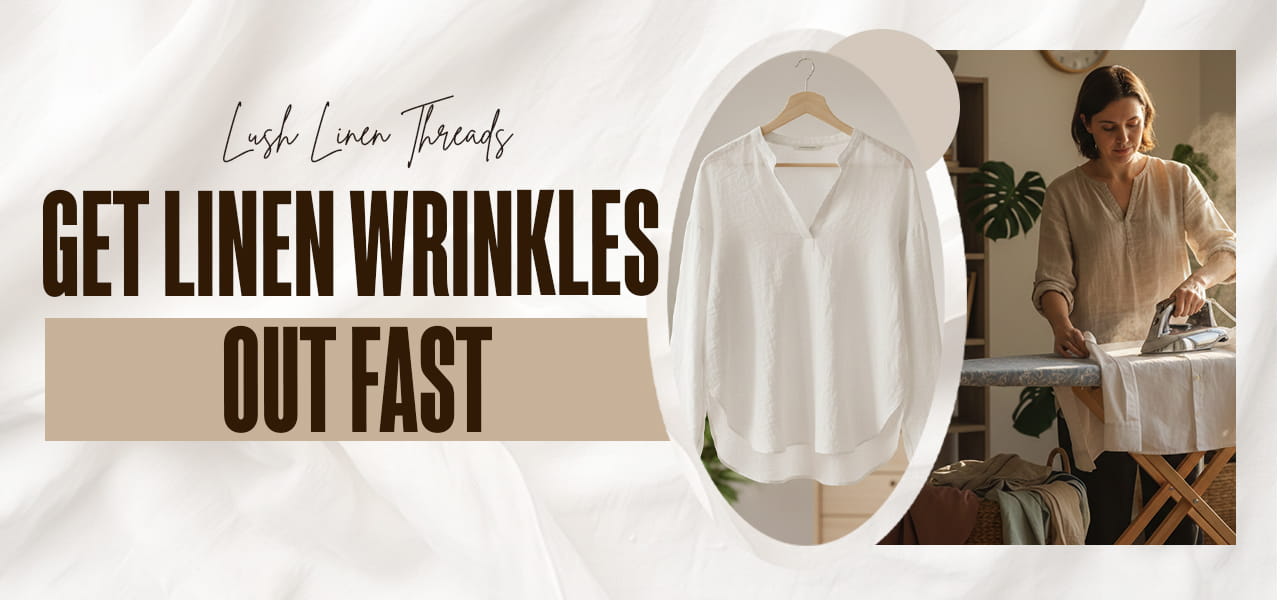
Linen looks polished with almost no effort, but it wrinkles the moment real life happens. In this guide on how to get wrinkles out of linen, Lush Linen Threads shares a quick way to choose the right fix based on whether your fabric is damp, dry, stored, or packed—so you get a smooth finish without shine marks or overwork.
The 60-Second Linen Wrinkle Fix Table
Linen wrinkles aren’t all the same, so the quickest fix depends on what the fabric needs right now. Use the check and the table below to match your linen’s condition to the safest method, the time it takes, and the one mistake to avoid.

Check If The Linen Is Damp, Dry, Stored or Packed
Touch the fabric first:
-
If it’s still slightly cool or damp, wrinkles release fast with hand-smoothing and hang time.
-
If it’s fully dry, add controlled moisture (steam or a fine mist) before smoothing or pressing.
-
If you see long, straight fold lines, treat them like “trained creases”: moisture + gentle tension + hang time (or press with a cloth).
Avoid Shine Scorching and Water Spots
Use this table as a shortcut. You don’t need to do everything—just follow the row that matches what you’re seeing.
|
Linen condition |
Wrinkle type |
Best method |
Time |
Risk to watch |
|
Slightly damp |
Soft rumple |
Hand-smooth + hang |
2–5 min |
Over-stretching edges |
|
Slightly damp |
Hard crease |
Quick press (label-safe) |
3–8 min |
Shine if you drag the iron |
|
Fully dry |
Soft rumple |
Steamer (vertical) |
2–6 min |
Water spots are too close |
|
Fully dry |
Hard crease |
Mist + press cloth + press |
5–12 min |
Shine or scorch |
|
Stored |
Fold line |
Light mist + tension smooth + hang |
10–30 min |
Over-wetting seams |
|
Packed |
Mixed |
Hang first, then steam |
10–20 min |
Wrinkles returning in humidity |
|
Sheets on the bed |
Surface rumple |
Mist + corner tension smooth |
3–7 min |
Damp patches |
|
Duvet edges |
Fold + edge creases |
Steam edges + hand-smooth |
5–10 min |
Stretching seams |
|
No tools |
Light rumple |
Shower steam |
10–20 min |
Limited effect on hard creases |
|
Dryer available |
Light–medium |
A damp towel or 2–3 ice cubes |
5–10 min |
Over-drying |
A few simple precautions prevent most linen damage. This is the same approach we use at Lush Linen Threads when we test linen for everyday wear. Always check the care label, especially for dark colors, blends, or trims. When ironing, press and lift to avoid shine. Keep steamers a little back to prevent wet spots, and avoid over-drying.
Iron Steamer or Dryer Refresh for Linen
To see how to get wrinkles out of linen with the least effort, it helps to match the tool to the situation instead of forcing one method every time.

When Ironing Works Best
Ironing is the clear choice when you want structure. Sharp creases, flat seams, clean hems, collars that sit properly—these are all moments where pressing makes linen look intentional rather than sloppy. The key is thinking in terms of pressing, not scrubbing. You’re setting the fabric flat with controlled pressure, not trying to force wrinkles away.
When Steaming Works Best
Steaming is ideal when linen just needs to look smoother, not flatter. Dresses, relaxed tops, wide panels, and delicate details all benefit from steam because it softens wrinkles without compressing the surface. It’s also fast and forgiving, especially when you can hang the garment and let gravity help.
When a Dryer Refresh Works Best
A dryer refresh is a handy shortcut for light to moderate wrinkles when the item is already clean. Keep the cycle short and add a touch of moisture so the fibers loosen instead of drying stiff. Take it out right away and hang it up, since longer cycles can set creases rather than smooth them.
How to Iron Linen Safely
Ironing linen is easiest when you treat it like a quick press, not a long ironing session. The goal is to use just enough moisture, protect the surface from shine, and follow a simple press order so the smooth result actually lasts.
Use Moisture and Follow the Care Label
Linen usually responds best to heat when there’s a touch of moisture involved. If you catch it while it’s still slightly damp after washing, pressing is noticeably easier. If the fabric is already dry, a light mist and a short pause—just enough for moisture to spread—can make a big difference in how smoothly wrinkles release.
The care label should always guide your settings. It’s the most reliable reference, especially when you’re dealing with dyed or finished linen.
Prevent Shine Marks While Pressing
Shine marks are one of the biggest reasons people dislike ironing linen, and they’re usually avoidable. Pressing on the inside when possible, using a pressing cloth on visible areas, and keeping contact time short all help. If a wrinkle resists, multiple brief presses are safer than holding the iron in one place.
Press in an Order That Holds Its Shape
Pressing order matters more than most people realize. Starting with seams helps set the garment’s shape. Moving next to structured areas like collars, cuffs, waistbands, or plackets keeps those areas crisp. Large panels come last, once the structure underneath is already stable. This approach reduces the chance of new wrinkles forming as you work.
No Iron Ways to Smooth Linen Fast
When you do not have an iron or you simply do not want to set one up, linen can still look neat in minutes. These quick methods use gentle steam or light moisture to relax wrinkles enough for a clean, wearable finish.

Use Shower Steam for Quick Touch Ups
When you’re traveling or don’t want to deal with equipment, shower steam is often enough for light wrinkles. Hang the garment away from direct water, let hot steam build for several minutes, then smooth the fabric by hand and leave it hanging a bit longer. It won’t replace ironing for sharp creases, but it can take linen from rumpled to presentable quickly.
Mist with Water and Smooth by Hand
For maximum control with minimal risk, plain water is often all you need. A fine mist, applied lightly, followed by smoothing with your palms while gently guiding the fabric back into shape, works surprisingly well. Hanging afterward lets gravity finish the job. If your tap water leaves mineral marks, distilled water is a safer option.
Wrinkle-release sprays can help, but linen absorbs what you apply, so patch test first. Some formulas leave residue over time and can make the fabric feel less airy.
Use a Hair Dryer for Small Wrinkles
For collars, hems, or pocket corners, a hair dryer can act as a quick spot fix. Keep it at a safe distance, warm the area briefly, and smooth with your hand. It’s not meant for whole garments, but it’s useful when you’re down to the last few minutes.
Prevent Wrinkles So They Don’t Come Back
Removing wrinkles is only half the story. Preventing them from setting in again is what makes linen feel easy rather than demanding.
Right after washing
Linen dislikes sitting in a wet pile. Taking it out promptly, giving it a firm shake, and aligning seams and edges before hanging dramatically reduces wrinkles without any tools.
Avoid over-drying
Over-drying is one of the main reasons linen develops stubborn creases. Removing it while it’s still slightly damp and letting it finish drying on a hanger or laid flat often leaves the fabric softer and smoother. This habit alone goes a long way toward keeping linen from wrinkling.
Smarter storage and packing
Rotating fold lines prevents the same crease from becoming permanent. Avoid compressing linen tightly in storage. When traveling, unpack and hang linen as soon as you can; even a short hang time helps release suitcase wrinkles.
Answers to Common Linen Wrinkle Questions
These quick FAQs cover the most common linen wrinkle questions that come up in real life, from damp vs dry pressing to storage creases and humid weather. Use them to confirm the best method before you spend time on the wrong fix.

Does linen wrinkle easily?
Yes. Linen has lower elasticity than many fibers, so creases show quickly, especially at folds and pressure points.
Should linen be ironed damp or dry?
Slightly damp is often easiest. Dry linen usually needs controlled moisture first.
Is steaming better than ironing?
Steaming is great for quick smoothing and delicate shapes; ironing works best for crisp structure and hard creases.
Can the dryer remove wrinkles from linen?
Yes, as a short refresh. Long cycles can over-dry and make creases sharper.
How do you remove fold lines after storage?
Light mist, gentle tension smoothing, and hang time work well; a pressing cloth helps for stubborn lines.
Do wrinkle-release sprays work on linen?
Some do, but patch testing is important because residue can build up.
Why do wrinkles come back in humid weather?
Humidity rehydrates fibers, allowing creases to reform. Hanging and light steaming usually help more than heavy pressing.
How do you smooth linen sheets without removing them?
Use corner tension, a fine mist, and palm smoothing, then let the surface dry before layering.
Once you know how to get wrinkles out of linen based on whether it is damp, dry, stored, or packed, the whole process becomes quick and predictable. For breathable, easy-care pieces you will actually reach for, explore everyday linen options from Lush Linen Threads.


