

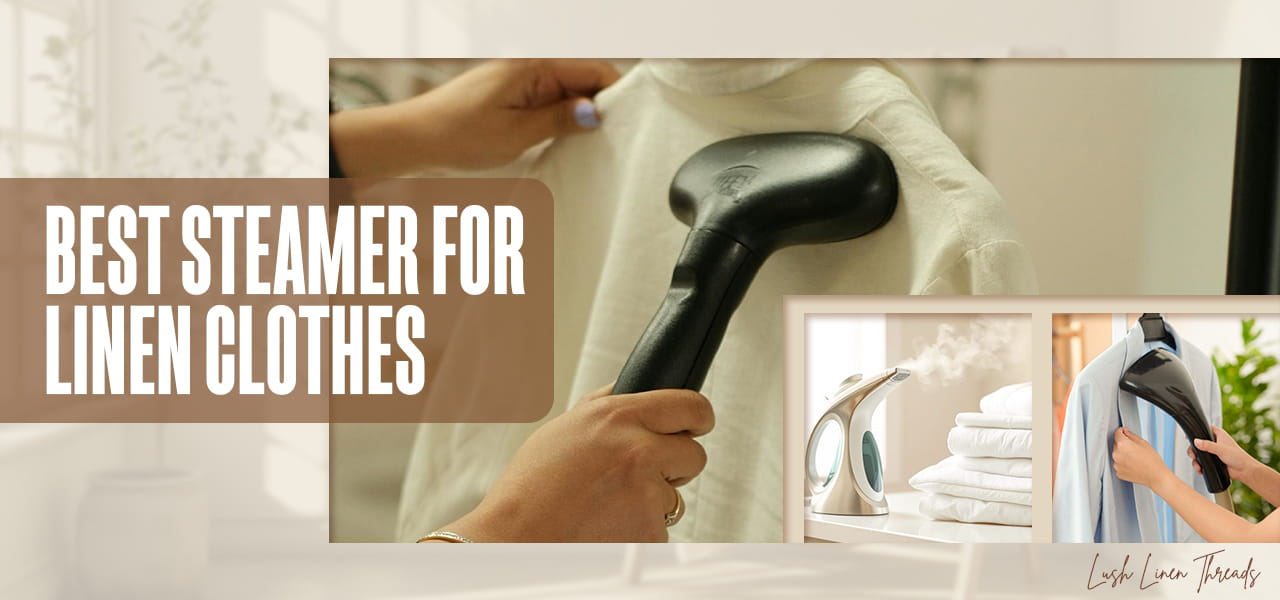
Linen is prized for its breathability, natural texture, and relaxed elegance—but it wrinkles easily. Using the wrong heat or tool can flatten its character and shorten its lifespan. This guide from Lush Linen Threads explains how to care for linen properly, compares buyer-favorite options, and helps you identify the best steamer for linen clothes to achieve smooth results without fabric damage.
What Makes the Best Steamer for Linen Clothes
Choosing the best steamer for linen clothes requires understanding how linen fibers respond to moisture, heat, and contact. At Lush Linen Threads, we emphasize that steam output, consistency, and steam head design all play a critical role in how effectively wrinkles release while preserving texture and drape. The following sections break down these essentials to help you select a steamer that supports long-term linen care.

Steam Output & Heat Requirements for Linen:
Linen responds best to steady moisture rather than dry, high-contact heat. As a rule of thumb, handheld steamers can work well for light everyday pieces, while standing steamers are more comfortable for larger or heavier linen items. Actual output varies by model, so prioritize continuous steam performance and anti-drip reliability over peak ‘burst’ claims.
Steam Consistency vs Peak Power:
For linen, continuous steam beats burst mode. It reduces repeat passes, keeps moisture more even, and makes it easier to control seams and hems without over-wetting one spot.
Steam Head Design & Fabric Contact:
A wide, flat steam head ensures even steam distribution, allowing mid-to-heavy linen (160–300+ GSM) to relax without concentrated heat that can damage fibers. Smooth edges and anti-drip features prevent water marks and shine, while swivel or angled heads make it easier to steam collars, cuffs, and layered areas, preserving linen’s texture and drape.
Top Picks for the Best Steamer for Linen Clothes
When looking for the best steamer for linen clothes, it helps to know which models perform consistently well on natural fabrics. The following top picks combine reliable steam output, user-friendly design, and fabric-safe features, making them ideal for keeping linen garments smooth, fresh, and long-lasting. Each steamer has been selected for its ability to handle different linen weights and care needs.
Note: Specs can vary by model and release year. The numbers below are typical ranges for popular versions—always confirm the exact specs on the product page before buying.
|
Model |
Best for |
Watch-outs |
Wattage |
Water Tank |
Cord Length |
Weight |
|
Jiffy Steamer — Best for Heavy Linen |
Heavyweight linen (220–300+ GSM), bedding, curtains, frequent or professional use |
Large footprint; longer heat-up time than handheld models |
1,500W |
2.0L |
2.5m |
7.5kg |
|
Conair ExtremeSteam — Best Handheld Steamer for Linen |
Light to medium-weight linen garments, travel, quick daily touch-ups |
Smaller water tank; less effective on thick or densely woven linen |
1,200W |
260ml |
1.9m |
930g |
|
Rowenta — Best Precision Steamer for Linen |
Premium linen garments, tailored pieces, precision care |
Higher price point; may be more than needed for casual use |
1,500W |
1.1L |
2.0m |
1.3kg |
|
Philips Garment Steamer — Best for Linen Fabric Safety |
Delicate linen, lightweight weaves, frequent gentle maintenance |
Lower steam intensity; may require extra passes on heavier linen |
1,200W |
300ml |
2.0m |
1.2kg |
|
PurSteam — Best Value Linen Steamer |
Budget-conscious users, casual home use, mixed linen garments |
Build quality and steam consistency may not match premium models |
1,300W |
1.5L |
2.1m |
1.8kg |
|
CHI Garment Steamer — Best for Linen & Cotton |
Mixed-fabric wardrobes (linen, cotton, blends), for everyday household use |
Less specialized for very heavy linen compared to professional steamers |
1,400W |
1.0L |
1.8m |
1.1kg |
How to Choose the Right Steamer for Linen
Selecting the right tool goes beyond brand or price. To get the most out of the best steamer for linen clothes, focus on how well it supports long-term fabric care, ease of use, and consistency—an approach aligned with the thoughtful linen care philosophy of Lush Linen Threads.

Steam Quality & Moisture Control:
Linen responds best to clean, evenly distributed moisture. Steamers that deliver a stable flow—without sputtering or dripping—help relax fibers without leaving residue or uneven damp patches. This is especially important for light or pale linen, where mineral traces and water spots are more visible.
Ergonomics & Usability:
Comfort and control matter when steaming linen regularly. A well-balanced steamer with a flexible hose or ergonomic grip allows smooth, vertical movement without fatigue. Features such as quick heat-up time and adequate water capacity also improve efficiency, especially when steaming multiple garments in one session.
Consistency for Long-Term Linen Care:
Steamers that maintain consistent output protect linen over time. Sudden surges or fluctuating steam levels can stress fibers and affect drape. Reliable, controlled steam supports shape retention and helps linen age gracefully rather than becoming stiff or flattened.
How to Steam Linen Clothes Properly
Steaming linen the right way helps smooth wrinkles while preserving the fabric’s natural texture and lifespan. The steps below focus on technique and timing to achieve crisp results without stressing the fibers.
Set Up for Effective Steaming:
Hang linen on a sturdy hanger with enough space around it to allow steam to circulate freely. Avoid steaming in cramped or poorly ventilated areas, as trapped moisture can slow drying and affect results. Always let the steamer reach full temperature before starting to ensure even vapor from the first pass.
Apply Steam with Controlled Movement:
Guide the steamer from top to bottom using slow, fluid motions. Let the steam do the work rather than pressing the head firmly against the fabric. For stubborn creases, gently stretch the area with one hand while passing the steamer lightly over the surface.
Let the Fabric Set Naturally:
After steaming, leave the linen hanging until it is completely cool and dry. This resting period allows fibers to settle into their relaxed shape. Good airflow helps lock in smoothness and prevents new creases from forming once the garment is stored.
Quick Answers About the Best Steamer for Linen Clothes
These frequently asked questions cover essential points about steaming linen safely, maintaining its appearance, and getting the best results from regular care.

Which type of garment steamer works best for home linen care?
A model with steady steam output (30–50 g/min), anti-drip protection, and a wide head for even penetration.
Can you steam linen every day without damaging it?
Yes, linen can be steamed frequently as long as the steamer provides consistent steam and you avoid pressing the head too hard against the fabric. Steaming is gentler than ironing and helps maintain linen’s natural drape and fiber strength over time.
How long does linen stay wrinkle-free after steaming?
It depends mostly on humidity, how fitted the garment is, and how much you move in it. Linen usually looks smooth for a few hours and can stay presentable all day with light wear—especially if you avoid tight folding right after steaming.
Is distilled water necessary when steaming linen clothes?
Using distilled water is recommended, especially in areas with hard water. It helps prevent mineral buildup, ensures consistent steam output, and reduces the risk of water spotting on light-colored or fine linen fabrics.
Can steaming help remove odors from linen fabrics?
Yes. Steam naturally lifts and neutralizes odors trapped in linen fibers. For best results, allow the garment to air out after steaming so moisture and released odors fully dissipate.
Choosing the best steamer for linen clothes is about protecting what makes linen special—its texture, drape, and longevity. With the right steamer and mindful care, your linen pieces stay smooth, fresh, and beautiful wear after wear. Explore the thoughtfully crafted collections from Lush Linen Threads and care for them with the same intention they were made with.


