

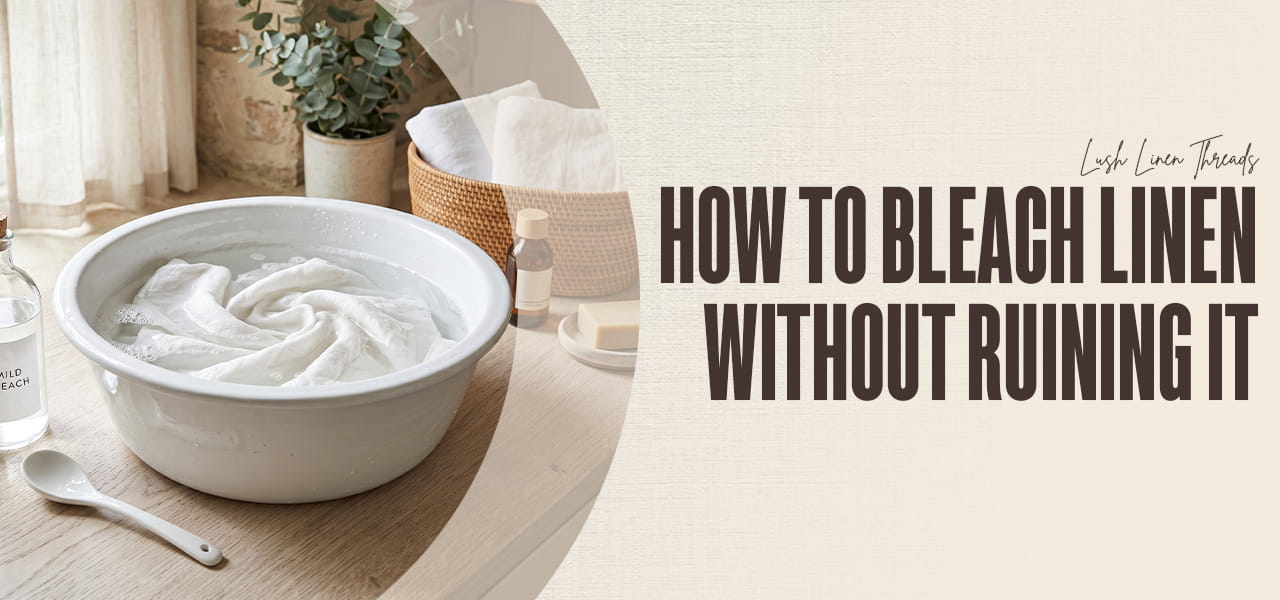
If you’re searching for how to bleach linen but worry about thinning the fabric or making yellowing come back, this guide is for you. Lush Linen Threads shares a simple, fiber-safe approach that starts with a quick check, then helps you choose the right whitening method so your linen looks brighter and still feels soft. These steps reflect common, fiber-safe practices for bedding, clothing, and table linens.
How To Bleach Linen With Oxygen Bleach Step by Step
If you’re searching for how to bleach linen safely, oxygen bleach is a smart starting point. Use the table to choose your timing, then follow the steps for steady whitening.

What Oxygen Bleach is
Oxygen bleach is an oxygen-releasing whitener often based on sodium percarbonate. It is usually the safest starting point for linen because it whitens gradually and is less likely to weaken fibers than chlorine. If you only remember one method, make it oxygen bleach for linen.
Quick Linen Whitening Plan at a Glance
Use the table to pick the right timing and approach, then follow the steps below.
| What you notice | Likely cause | Best choice | Soak time | Water temp | First step | Avoid |
|---|---|---|---|---|---|---|
| Yellow pillow area | Oils + sweat | Oxygen bleach | 60–120 min | 30–40°C (86–104°F) | Pre-treat hotspot | High heat drying |
| Gray or dull whites | Detergent residue | Oxygen bleach | 30–60 min | 30–40°C (86–104°F) | Reduce detergent | Fabric softener |
| Yellow fold lines | Storage moisture | Oxygen bleach | 30–60 min | 30–40°C (86–104°F) | Rewash before drying | Storing damp |
| Tea or coffee stains | Tannins | Oxygen bleach | 30–60 min | 30–40°C (86–104°F) | Cool rinse first | Heat before stain lifts |
| Underarm yellowing | Deodorant + sweat | Oxygen bleach | 60–120 min | 30–40°C (86–104°F) | Gentle spot treat | Strong bleach |
| Vintage linen | Weak fibers | Mild oxygen bleach | 15–30 min | Cool–warm | Support when wet | Chlorine bleach |
Now follow the step-by-step routine for consistent results.
One Minute Linen Check Before You Start Treating
Linen turns yellow or gray for specific reasons—usually oils, product residue, minerals, or damp storage. Use the one-minute check below to pick the right method before you treat.
Where the yellowing shows up
Use the location as your clue. Pillow and upper-sheet yellowing usually comes from skin-contact residue. Underarm discoloration often relates to deodorant and sweat salts. Fold-line tinting points to storage or not drying fully. Overall dullness suggests a film on the fabric. Orange specks are often iron-related and need targeted care.
Quick feel-and-smell clues
A slick or waxy feel usually points to product buildup. A rough, chalky hand can signal mineral deposits. A musty smell suggests trapped moisture. If it looks “clean but flat,” suspect residue as the first cause.
Once you name the likely cause, choose one targeted fix—rinse-reset for residue, a mineral-removal soak for deposits, or a dry-out and airflow reset for dampness. Hold off on high heat until the fabric looks fully clear.
Steps to Whiten Linen Safely
This is a controlled routine you can repeat without chasing “instant white.”
Step 1: Read the care label
If the label warns against bleach, treat that as your limit. When in doubt, test on a hidden hem.
Step 2: Pre-treat only the hotspots
For pillow yellowing or underarms, use an enzyme-based pre-treat and let it sit 10–15 minutes. Spot-first is safer than soaking everything for hours.
Step 3: Dissolve the oxygen bleach fully
Mix the powder into water first until no granules remain. Undissolved powder can leave light speckles on fabric.
Follow the product label for dosing and start with the lowest effective amount—more powder doesn’t mean better whitening, it often means more residue to rinse out.
Safety note: Dissolve powder fully before adding linen, and avoid sprinkling dry powder directly onto fabric. If your linen is dyed or vintage, test the solution on an inner hem first.
Step 4: Soak in warm water
Soak in warm water at 30–40°C (86–104°F). Light dullness often lifts in 30–60 minutes, while deeper yellowing may need 60–120 minutes. Gently press or stir during the soak so the solution reaches folds and seams evenly.
Washing machine method (no bucket needed):
If you don’t want to soak in a tub, you can still use oxygen bleach safely in the washer. Dissolve the oxygen bleach in a cup of warm water first, then add it to the drum (or the dispenser if your machine allows it). Wash on warm (30–40°C / 86–104°F) using a normal or gentle cycle, and use a moderate amount of detergent. Always add one extra rinse. If the item is heavily yellowed (pillow zones, underarms), pre-treat those areas first before running the cycle.
Step 5: Wash normally with less detergent than you think
Residue is a common reason whites look dingy. Use a moderate dose and a normal or gentle cycle, depending on the item.
Step 6: Do the rinse-reset
Add one extra rinse. This single step prevents leftover product and lifted soil from settling back into the linen.
Step 7: Dry with care
If the stain is not fully gone, air dry or use low heat. High heat can lock in what remains.
Mistakes That Make Yellowing Return
Yellowing usually comes back for the same reasons: product buildup, skipped rinses, heat applied too soon, over-soaking, or storing linen before it’s fully dry. Keep treatments short and controlled, rinse thoroughly, and avoid high heat until stains are completely gone.
Keep Linen White Longer
Whitening works best when you stop the causes from rebuilding:
- Use a moderate detergent dose and skip fabric softener
- Add an extra rinse when whites start to look dull
- Pre-treat hotspots instead of soaking everything
- Dry fully before storing; avoid damp closets
- Repeat shorter treatments rather than one long, harsh soak
The simplest way to keep linen bright is consistent rinsing and fully dry storage. Most “yellowing that returns” is residue + heat, not a lack of bleach.
Rinse until the water runs clear, then dry gently and store only when fully cool and bone-dry. Use breathable storage and avoid high heat early, so your linen stays fresh-looking without extra steps.
Why Linen Turns Yellow or Gray (In 60 Seconds)
This section helps you quickly understand what’s behind discoloration, so you can choose the right approach instead of relying on random “quick fixes.”

Why does linen turn yellow or gray?
Linen shifts color for a reason. Yellowing near pillows or collars is usually oil, sweat, and skincare residue that oxidizes over time. Gray or dull whites often point to detergent/softener buildup, and hard water can add a beige cast. Fold-line yellowing usually comes from storing items before they’re fully dry.
What this guide helps you avoid
This guide helps you avoid three common mistakes: using one harsh method for every stain, soaking longer than needed, and drying with heat before results are fully clear.
When you treat yellowing and dullness as residue, oxidation, or storage issues, the solution becomes simpler. Avoid harsh shortcuts and early heat to prevent repeat yellowing and protect linen longer.
Best Whitening Tips for Each Linen Item Type
Different linen items discolor for different reasons. Bedding picks up skin-contact residue, clothing stains cluster around stressed areas, and table linens react to food and drink.
Sheets and pillowcases
Pillow areas usually discolor first because they absorb the most oils and sweat. Focus on that zone before treating the rest of the fabric, then use a warm soak followed by a thorough rinse. If you sleep hot, residue control matters just as much as whitening, because leftover detergent can make yellowing return even after it looks clean.
Women’s linen clothing
Underarm areas need extra care since seams and fabric there are already under stress. Start by pre-treating the affected area, then move to a controlled soak rather than jumping straight to a harsh method. Washing garments inside out helps reduce surface wear and keeps the outer fabric looking smoother over time.
Tablecloths and napkins
Discoloration on table linens often comes from drinks and food rather than body contact. Tea and coffee stains respond best when rinsed with cool water first, while grease needs a different approach before soaking. After treatment, wash, rinse well, and always check the fabric before drying so heat does not set what remains.
Adjusting by item helps you lift discoloration with less wear. For more care tips and easy-care pieces, explore Lush Linen Threads.
How To Use Chlorine Bleach Only When Necessary
Chlorine can work, but it is easier to damage linen with it. Treat it like an emergency tool, not your default routine. This section answers the common question about chlorine bleach on linen without putting your fabric at risk.
When chlorine is a bad idea
Chlorine is not a good choice for linen that is already fragile. Older pieces, thin fabric, or items that have been washed many times can lose strength quickly when exposed to it. It should also be avoided on colored or printed linen, where lightning can turn uneven or dull. If discoloration comes from oils, wash residue, or water minerals, gentler methods usually solve the problem without the risks that come with chlorine. Using it repeatedly as a routine “brightener” is especially damaging and often leads to fabric that looks worn before its time.
Safer rules if you must use it
If chlorine is truly necessary, control matters more than speed.
- Use a highly diluted solution and keep the contact time short.
- Never mix chlorine with vinegar, acids, or ammonia.
- Work in a well-ventilated area and protect skin and eyes.
- Test on a hidden area before treating the whole piece.
- Rinse immediately and thoroughly, then run one normal wash.
If the fabric starts to feel rough, thin, or shows uneven light patches, stop and switch to gentler care to prevent permanent damage.
Chlorine can work in stubborn cases, but it should never be the first choice for linen. If you must use it, keep it diluted, limit contact time, rinse thoroughly, and stop at the first sign of weakening.
Quick Answers to Common Linen Whitening Questions
If you’re unsure about how to bleach linen, these FAQs clarify safety, soak time, and water temperature.

Can you whiten beige or naturally dyed linen?
Yes, but test first—oxygen bleach can slightly shift some natural tones.
How often can you whiten linen without weakening it?
Treat only when needed and use shorter sessions; repeated harsh treatments wear fibers faster.
What if whitening looks patchy?
Re-wet evenly, dissolve product fully, and repeat a shorter soak with gentle agitation.
Is oxygen bleach safe for vintage or thin linen?
Use a mild mix, keep soak time short, support fabric when wet, and stop if fibers feel weak.
What should you never mix with bleach products?
Never mix chlorine bleach with vinegar, acids, or ammonia; dissolve oxygen bleach fully before use.
Oxygen bleach with warm water and a controlled soak is usually the safest option, while chlorine should be rare. Rinse well and avoid high heat until stains are gone.
A consistent, controlled routine makes how to bleach linen simpler and more fabric-safe over time. Using oxygen bleach with thorough rinsing and gentle drying helps keep linen bright without harsh shortcuts, while chlorine should remain a rare backup. Keep these habits steady, and let Lush Linen Threads be your reference point for everyday linen care and staples.


