

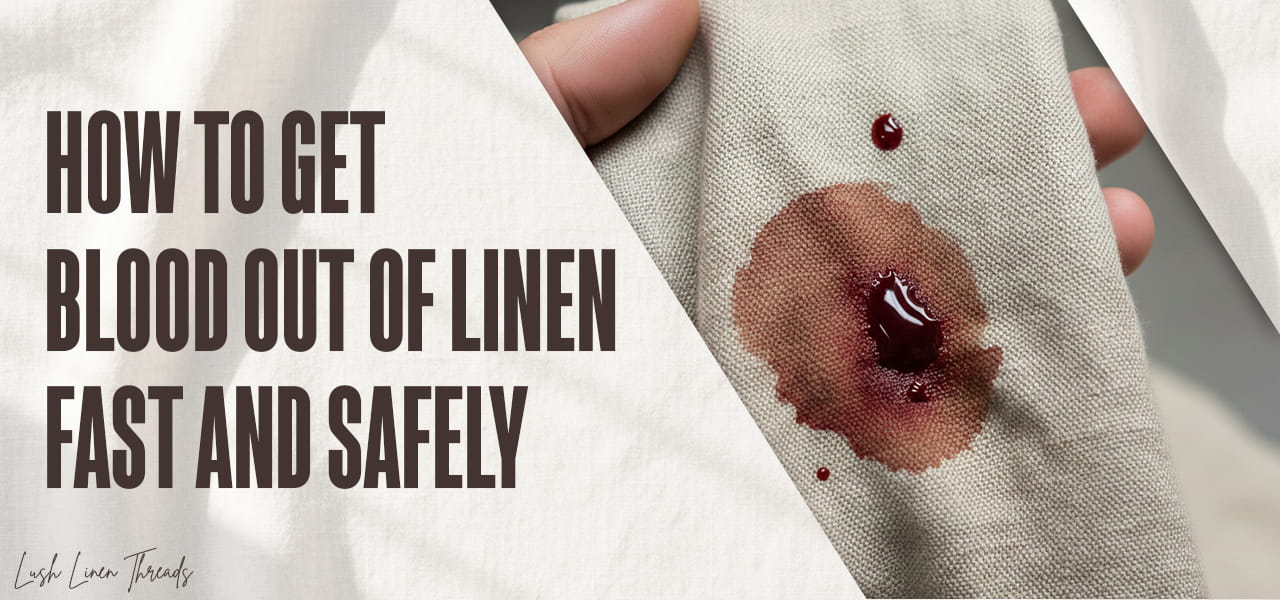
Blood on linen feels urgent, but you do not need harsh shortcuts to fix it. In this Lush Linen Threads guide on how to get blood out of linen, you will start with a quick triage, then use a situation table and simple steps that protect the weave. The result is a cleaner finish with fewer rewashes, less fading risk, and no heat mistakes that set the stain. This is the same routine we use for everyday linen sheets and garments, because it protects fibers while still lifting protein stains effectively.
How to Get Blood Out of Linen Right Away
Blood on linen is easiest to lift with the right first move. This section shows what to do for fresh versus dried stains, plus the key mistakes that make removal harder.
Quick Routine for Fresh Blood
Treat it like a “cold-first” stain. Turn the fabric so you can run cool water from the back side to push the stain out, not deeper in. Keep the water cool (not warm) so the protein does not bind to the fibers. Then use a clean towel to press and lift until the area stops transferring color.
Once the fabric is damp and the stain has lightened, add a small amount of liquid detergent or an enzyme cleaner to fully wet the spot. Let it sit briefly so it can work, then rinse again. Move to a wash cycle only after the stain is clearly fading. Blood is a protein stain, so cool water plus enzymes helps lift it without binding it to the fibers.
Quick routine for dried blood
Old stains need moisture time. Start by rehydrating the area with cool water so the crusted edges soften. After that, soaking is usually more effective than friction. Choose an enzyme soak when you want a gentler option, or oxygen bleach when the fabric is white or colorfast. A realistic range is 15–60 minutes for enzymes and 30–120 minutes for oxygen bleach, depending on how set the stain is.
After soaking, rinse thoroughly and reassess. If a shadow remains, repeat the soak rather than scrubbing hard. When you wash, keep it cool to warm—typically 20–40°C—on a gentle cycle, then reassess the stain before you move on.
Mistakes that set the stage
The fastest way to lock in blood is heat—hot water, the dryer, or ironing. Skip aggressive rubbing that roughens the surface and spreads the stain. Avoid chlorine bleach on linen because it can weaken fibers and trigger yellowing over time. Never mix cleaning products—especially bleach with acids like vinegar.
For vintage, printed, or dry-clean-only items, test a hidden seam first or use a professional cleaner.
What you need: cool water, two clean towels, liquid detergent or an enzyme cleaner, and oxygen bleach only for white or proven colorfast linen.
Best Method Table for Common Linen Situations
Use this table first. It’s designed to match real-life scenarios and help you choose the safest “first best move.” You’ll need cool water, two clean towels, liquid detergent or an enzyme cleaner, and oxygen bleach only for white or proven colorfast linen. Always dissolve oxygen bleach completely in water before soaking to prevent speckling.
| Linen situation | Do this first | Best remover | Time | Then |
| Fresh stain on sheets or clothing | Cool rinse from the back, blot | Detergent or enzyme | 5–15 min | Wash cool, air-dry, check |
| Dried stain on sheets | Rehydrate, then soak | Enzyme | 15–60 min | Rinse, repeat if needed, then wash |
| Dried stain on white linen | Rehydrate, then soak | Oxygen bleach | 30–120 min | Rinse well, then wash |
| Stain on colored linen | Colorfast test first | Enzyme | 15–45 min | Gentle wash, air-dry check |
| Stain already washed or heat-exposed | Rehydrate and go slow | Enzyme, then oxygen if safe | Multiple rounds | Repeat gentle cycles |
If you only remember one rule: Do not apply heat until the stain is gone.
How to Get Blood Out of Linen Step by Step
Use the steps below as a simple checklist. They are split into fresh versus dried stains, so you can follow the right order and clean the fabric without overworking it.
Steps for Fresh Blood on Linen
Before you start, treat the stain as a time-sensitive spot clean and follow these steps in order so you lift the mark without stressing the linen fibers.
Step 1: Turn the fabric over and rinse from the back with cool running water until the runoff lightens.
Step 2: Blot with a clean towel using a press-and-lift motion, then repeat until little color transfers.
Step 3: Place a towel behind the spot and apply a small amount of liquid detergent or enzyme cleaner to dampen the area fully.
Step 4: Let it sit for 5–15 minutes, keeping the fabric slightly damp, then rinse with cool water and reassess.
Step 5: Wash using linen-safe settings at 20–40°C on a gentle or moderate cycle, and add an extra rinse if needed.
Step 6: Air-dry and inspect in natural light. Linen may shrink about 2–5%, so avoid unnecessary heat and re-washing.
If a faint shadow remains after drying, repeat the gentle pre-treat and cool wash once more instead of using higher heat or harsher chemicals.
Steps for Dried Blood on Linen
Dried stains lift best with a patient soak-and-rinse routine, so follow these steps to loosen the mark without stressing the linen.
Step 1: Wet the stain with cool water and let it sit for 5–10 minutes to rehydrate.
Step 2: Blot gently, then repeat the rehydrate-and-blot once if the stain still feels stiff.
Step 3: Soak with an enzyme cleaner for 15–60 minutes, then rinse thoroughly.
Step 4: If a shadow remains on white or proven colorfast linen, soak with fully dissolved oxygen bleach for 30–120 minutes, then rinse well.
Step 5: Wash cool to warm at 20–40°C using a gentle or moderate cycle, avoiding high agitation.
Step 6: Air-dry and inspect, then repeat gentle cycles if needed instead of scrubbing or escalating harsh chemicals.
If a faint shadow remains, repeat one more gentle soak-and-wash cycle rather than scrubbing harder.
Safe Options for Colored Linen and Sensitive Homes
Colored linen and fragrance-sensitive households often do best with fewer products and longer rinsing. This section shows a quick colorfast check, an enzyme-first method, and rinse-focused aftercare to avoid fading, stiffness, or lingering residue.
How to protect color and prevent fading
Before you reach for anything stronger, do a quick color check so you do not trade a stain for a faded patch. Test an inside seam with a damp cloth for about 30–60 seconds. If you see dye transfer, stay on the gentler track: cool water, mild detergent, and enzyme-based treatment only. For most dyed linen, the safest workflow is simple and controlled, moving from a cool rinse to a targeted pre-treat, then a cool wash, followed by an air-dry inspection.
How to clean without hydrogen peroxide
You can still get strong results without peroxide by focusing on timing and thorough rinsing. Start with a cool rinse and gentle blotting, then use either an enzyme cleaner or a small amount of liquid detergent on the damp area. Wash cool, and if the fabric feels slick afterward, add one extra rinse to prevent residue. This approach works especially well when you treat the stain early and avoid heat until you are sure it is fully gone.
When vinegar or baking soda can help
- Vinegar: best used in a rinse step to cut detergent residue and reduce odor, not as the main stain remover.
- Baking soda: useful for mild deodorizing and light boosting, but it will not replace enzyme action on protein stains.
- How to use them: treat them as support tools after the main cleaning step, then rinse well.
Protect the dye first and keep the routine gentle to avoid damage. Use vinegar or baking soda only as add-ons, then rinse well for a clean, soft finish.
Aftercare That Keeps Linen Looking New
Once the stain is gone, rinse thoroughly—leftover cleaner residue is a common reason linen feels stiff or looks dull. If needed, add one extra rinse to restore softness and brightness.
Once you are happy with the result, focus on rinsing thoroughly. Cleaner residue is a common reason linen feels stiff or looks slightly dull, especially on bedding, so an extra rinse can make a noticeable difference in softness and brightness.
For storage, only put linen away when it is completely dry and cool to the touch. Choose breathable storage and avoid tightly sealed spaces that can trap moisture, so the fabric stays fresh between uses.
When you protect dye first, keep the routine mild, and rinse thoroughly, you can get a clean result without trading it for dullness or damage. For easy-care linen you can feel confident treating at home, explore breathable essentials from Lush Linen Threads.
Common Questions About Blood Stains on Linen
These quick FAQs answer the most common concerns people have when treating blood stains on linen, from timing and temperature to choosing the safest cleaner. Use them as a fast check when you want a clear next step without overthinking it.
What is the fastest, safest way to remove blood from linen?
Rinse with cold water from the back, blot gently, pre-treat with detergent or an enzyme cleaner for 5–15 minutes, then wash cool and air-dry, check before using heat.
Does heat make a blood stain permanent on linen?
Yes. Hot water, the dryer, or ironing can set leftover blood into the fibers, so keep the process cool and only use heat after the stain is fully removed.
Can I use hydrogen peroxide on linen sheets?
Sometimes, but test first, especially on colored linen. Peroxide can affect dyes and finishes. Enzymes are often safer for routine use.
Is oxygen bleach safe for linen fabric?
Generally, yes, when used correctly, especially on white or colorfast linen. Use proper dissolving, soak for about 30–120 minutes, then rinse thoroughly.
How long should I soak blood-stained linen?
Enzyme soaks are often 15–60 minutes. Oxygen bleach soaks are often 30–120 minutes, depending on stain depth and fabric sensitivity.
How do I get dried blood out of linen sheets?
Rehydrate with cool water first, then soak with an enzyme cleaner. If a shadow remains on white or colorfast linen, follow with an oxygen bleach soak, then wash cool and air-dry check.
If one detail matters most, it is choosing the gentlest method that still fits your situation and then giving it enough time to work. A steady, step-by-step approach usually beats quick fixes, especially when you want clean results without stressing the fabric.
Most stains lift when you act early, stay gentle, and keep heat out until the fabric is fully clean. If you want a simple reference for how to get blood out of linen, bookmark this routine and explore more fiber-safe care from Lush Linen Threads.


